Showing posts with label 2012. Show all posts

Friday, July 6, 2012

Prometheus

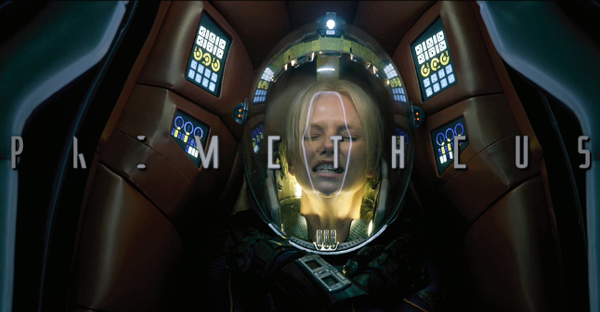
Propelled to the forefront of potential great summer entertainment by admittedly brilliant promos, PROMETHEUS arrived with a lot to live up to. Thought of in selective terms, Ridley Scott was similarly heralded for merely returning to the genre that made him famous. ALIEN is admittedly, a fucking masterpiece, and BLADE RUNNER has its charms, but past those two films, and especially in the 2000's, Scott hasn't had much to support the claim that he's a great director. What should have been a warning for what happened with PROMETHEUS: his previous film, ROBIN HOOD, was similarly paraded about in promos, which, like the PROMETHEUS ones, were stunningly gorgeous and textured, and showed the most exciting master-shots and score-swells. But ROBIN HOOD was overlong and under-loved (justifiably so), with a slew of forgettable fare like BODY OF LIES and KINGDOM OF HEAVEN going all the way back to his overrated oscar-winner bore: GLADIATOR. But 12 years of not even mainstream acclaim should have been another warning for what PROMETHEUS was to be, which is, to get to the point: a very pretty, very under-thought bore. Beginning with some Malick-reminiscent, hyper-digital, CGI shots of lakes and primordial earth, a long take brings us to a Lord Volemort-faced alien donning a jedi knight's robe, standing at the edge of a waterfall before ingesting some alien-goo and disintegrating into the water. Scott's beginning, followed by a group of scientists off to explore our genesis in space, is basically a rip-off of the beginning of the great sci-fi movie, 2001. Noomi Rapace, breathtaking future-tech, and a brilliant Michael Fassbender's android: David listening to opera and learning linguistics, breeze us through the following scenes, which all fit into a similarly soft and lulling tone, which, oddly, comes right after an alien exploding into a waterfall. Herein lies the fatal flaw of PROMETHEUS, which is that it has small sets of scenes that work well together, and then jarringly jolt into a very differently toned set of scenes. When Scott then pulls all of the puzzle pieces together, he's pulling together a million different tones, and we get a mess of goo similar to the opening scene's conceit. The film is, like ALIEN, strongly rooted in the thrills of aliens who are out to get the explorative scientists, but Scott has so many different set-ups or separated characters, that each death is catered to with special care. This would seem like a good approach to veil slasher-movie sensibilities, but in fact it undermines common sense: with too many storylines that are nullified with the deaths of they seek to set off. For example, there are around three different aliens in the film that off somebody, although they're all vaguely related, there's an agent that the android infects a scientist with, and yet another scientist who, after being apparently killed by an alien, comes back in zombified form to be offed with the arcs of a flameflower against the towering CGI mountains. When the jarring death scenes aren't pulling the film down, Scott fills empty space with trite storylines of corporate-greed which are nothing more than a rehash of that exact same greed he established in the original Alien film that made everything go wrong. But rather than have his prequel set up the companies desires and considerations about the alien civilization, they seem to have already been decided on exploiting everyone they can, which is more lazy than cynical. Similarly lazy is the grating Creation vs. Evolution debate, which is surfacy, clichéd, and weak, with revelations like: if the aliens created humans, who created the aliens acting as the endgames to conversations. Essentially, the films a big, lazy, failure with a few scenes that work well on their own, but then remind us that they're connected to a feature length story. Of especially good interest: an abortion scene with a, easy-bake oven-esque surgery machine. Past that, it's not much.

2/5 Stars
Thursday, June 7, 2012

The Avengers


A few years ago, there was a stream of awful films coming out in summer, turning audiences away to the lack of originality in Hollywood’s summer movie output. Times haven’t really changed in terms of originality, THE AVENGERS being the result of around four quasi-prequels which themselves are, of course, based off of the ideas of the people at Marvel. But what has changed is the quality of our summer films, and most of them have been handed over to competent directors and writers, to the point where almost every summer film is acclaimed and singled out for being above the usual standard. In some cases, this acclaim is false, as it was for RISE OF THE PLANET OF THE APES. Filmic continuity and good pacing doesn’t always equal a good film, but the overrated Joss Whedon’s THE AVENGERS is deserved of the acclaim it has been met with. Whedon has been catapulted, weirdly, seeing as the only other film he’s directed was SERENITY, which few people have ever even heard of. But despite the weirdness of Whedon’s ascent, THE AVENGERS is actually a pretty damn good film, giving equal screen time to each of the superheroes and arranging villains who are equal parts smart, ridiculous, and comical. But what Whedon successfully accomplishes is a good dynamic between each of the heroes, each of them having special or funny moments, and the focus concentrated on each of their (admittedly small) arcs. Scarlett Johansson, a continually underrated actress, brings kinetic power to Black Widow, performing her own stunts and consistently tricking the audience into believing her to be a weak woman, and then turning the tables. Mark Ruffalo as a new character, the Hulk, is also effective in the sense that he gives us exactly what we want: smashing shit. That’s what’s at the heart of Whedon’s genius, for he does nothing less than give us what we want. Big explosions, fun dialogue, batshit effects.

★★★★/5

Monday, May 28, 2012

The Woman in Black

Unlike most modern horror films, THE WOMAN IN BLACK is very low on gore, or even big, sound/quick-camera-movement scares. Rather, as the vessel for Daniel Radcliffe's first film after the end of the Harry Potter series (although not his first film outside of that pantheon), THE WOMAN IN BLACK plays a safe game of classically mounted horror. A lawyer in what we're supposed to take as early 20th century England, Radcliffe's ridiculously stubble-ridden Arthur travels at the bequest of his firm to take care of an abandoned plot of land in a far-off town. Upon his arrival, Arthur is briskly shooed by the townspeople, although he finds a friend in Sam Daily (Ciarán Hinds), who drives him about town as he undergoes his investigation of an estate. The estate, it so happens, is one that has come under Arthur's control due to a tragedy, in which a child died, and many people kept their mouths shut about what actually happened. More children in town begin to die, however, after Arthur is spooked at the crumbling old house and sees a ghost, the woman in black. But, as I said before, most of THE WOMAN IN BLACK's scares are pretty lowly, and only the wonderfully cloudy landscape is to wonder at. The film also ends with such a cynical but inevitable event, that it's sort of disappointing in its concession to modern horror endings. The film isn't much, but its pacing is well handled, and Radcliffe's Arthur is a good companion for the duration. But most of the horrors that we're supposed to be shocked at are pretty weak, and despite the good execution of the story, everything that's supposed to be a high point is at the same level as the rest of the film.

★★

Sunday, May 13, 2012

The Innkeepers

Much of this film is so good. The way that the characters hang out, the pacing, the title-cards, the color palette. And yet, it falls into a trap that so many films of 2012 have fallen into, that it's almost becoming a theme. I would relate the syndrome to Brian De Palma's worthless piece of crap: CARRIE. There's a film that, if the theater had lost electricity twenty minutes before the end of the movie, I would have walked home thinking it a masterpiece. The same was true of CHRONICLE. And now the same is true of THE INNKEEPERS. All of these films establish a wonderful sense of its individual values. In CARRIE, that's empathy. In CHRONICLE, it's anti-action. And in THE INNKEEPERS, it's sense of place. For the film slowly creates what it's like for the two characters: Claire (Sarah Paxton) and Luke (Pat Healy) as they work in the Yankee Pedlar Inn on its last weekend. The two hang out, flirt with each other and the idea of ghosts in the hotel, and a couple of weird last-minute guests. Director Ti West gives the hotel a very specific sense, and we watch how Claire reacts to Luke's inability to replace the rooms' towels, calling him to come down for his shifts, and surfing the internet at four in the morning. Then, however, the film loses its way because it did not trust what made the good parts of it so good. It falls into a clichéd universe of poorly executed fright scenes, and a truly dumb ending. THE INNKEEPERS has an ending that betrays the rest of it more than CHRONICLE, but in a similar way to CARRIE. Both films are horror films, so I'm not surprised. But still, THE INNKEEPERS is just so wonderfully meandering at the beginning that sharp shifts in mood and tone just ruin the film.

★★

Monday, March 26, 2012

The Hunger Games

THE HUNGER GAMES is a well made and entertaining film. These advantages come from the direction of Gary Ross, who adorns the futuristic world with some great sets and tones, and Jennifer Lawrence, who already proved her talent in WINTER'S BONE, but manages to prove herself even more here. The story focuses on an extremely implausible premise: it's the near future and after an apocalyptic event, a scarce world has been broken into 12 districts. The poorer ones revolted against the rulers years ago, and so now all of the districts are forced to offer up the "tribute" of one young man and one young woman between the ages of 12 and 18 to fight in the "Hunger Games". The battle is to the death, and one person comes out alive. How such a convoluted form of quasi-supression came about is anyone's guess, or, perhaps revealed in a later portion of the series. (I will admit right here in this mixed review that perhaps many of the film's weaknesses lay in the fact that I don't know what the following books reveal). Nevertheless, Katniss Everdeen (Lawrence) lives in district 12. At the selection ceremony for the hunger games, her sister is chosen, so Katniss volunteers herself to order to save her sister. She, and a boy named Peeta, are sent to the hunger games. For the rest of the film, we are glided by Ross through the pre-game preparations which include an entertainingly hammed-up Woody Harrelson as their mentor. Once the duo are finally in the games, the film manages a depressing story rather well. What I object to is the message of the film, even though the film is done pretty well. For a story about the oppression of authoritative figures, it uses a pretty flimsy, and frankly ludicrous, excuse for why nobody revolts. The idea that a guaranteed essential yearly sacrifice would quell the masses is sort of ridiculous, and the film itself shows District 11 going apeshit after one of their players is killed. Also, the film seems to say that the futuristic dystopia is a broken one, for the solution conjured up by the rulers, is sick. But if this is true, then the film looks down at you for watching it. It looks down at you for taking pleasure out of the deaths of the children who die in the hunger games. Most of these deaths are minimized by bad metaphors about hope and easy ways to make people the bad guy, but the film is paradoxically something that wants to be read because it's of such "importance" and its "allegories" are so "startling", and something that if you read, you're part of the problem, or someone who's just a step away from taking pleasure out of child-deaths in the future. And yet, the film is so well done, that I can't help but at least hope that some of these weaknesses or clarified in the future films. This one however, is a depressing piece of cynicism. I'm all for cynicism, but when it's created by thoughts that are poorly formed, it just serves to undermine itself.

★★ out of Five

Thursday, March 22, 2012

Game Change

I liked this film a lot, and I was surprised that I did. For many of the recent films produced about political issues, too much obviousness is thrown about, and too many things that we already knew. This film didn't change my view that documentaries suit this issue a lot better, but it's so much better than films in its same sub-genre like the slog, RECOUNT, that it succeeded on the basis of being entertaining, truthful, and expanding on a subject, rather than re-iterating it. From the points of view of advisors Steve Schmidt (Woody Harrelson) and Nicole Wallace (the ever-increasing in talent Sarah Paulson) to John McCain's doomed 2008 bid for the presidency, we see the decision from the Republican point of view in the selection of the disastrous Sarah Palin as the Vice Presidential candidate. Now, from anyone who has seen a 10 second clip of Palin, she's obviously a fool, but what the film depicts is that it was A) A lack of prepping and checking on Palin surprised the advisors when she turned into a total disaster B) Not only was she disastrous, but she became enamored with her own fame and began to disobey the advisors and C) It was still a sympathetic thing to watch someone be proved an idiot. Much of the film's entertaining nature is furthered by the relationship Palin was showed to have with her advisors. In my favorite scene of the entire film, Nicole Wallace, who refused to work with Palin any more mid-campaign, starts crying in front of Schmidt, saying that she just couldn't even vote. A lot of GAME CHANGE's success also comes from a quality that many good documentaries have, which is containing something that is unarguable to its own case. Even Steve Schmidt, in an interview on MSNBC's "Morning Joe" admitted that the film was extremely accurate in its depiction. Julianne Moore is also very good in her portrayal of Palin, and its less an impersonation than an interpretation. The whole cast is great, and that helps the film from slogging in what could have been more mundane bits.

★★★ out of Five

Monday, March 19, 2012

Project X

Coming into PROJECT X, my expectations were set for a good hour and a half of complete and total crap. The film had been panned by critics, and I couldn't see Judd Apatow's crowd coming up with anything resembling authenticity. What I got instead though, was a film that had the same disease as CHRONICLE. Both films attempt to show a slice of teenage highschooler life in 2012. Both succeed at that, but, because they have to be billed so that people will want to go and see them, there's an edge to them. For CHRONICLE, that edge was that one kid went batshit and blew the fucking shit out of the town. For PROJECT X, which begins as a movie about a kid's birthday party, the edge is that the party blows the fucking shit out of the town. I can see where these movies would be without their edges, they would be wallowing in indie netflix-instant-watch land. They would simply be entertaining movies that have defined what it's like to be a teenager in 2012. That's why it's such a shame that both films miserably fail. PROJECT X, for example, shows some real authenticity with the way everybody talks, how much everyone drinks, and how fun and out of hand the party gets. Once everybody's on ecstasy at the party, it's hard to keep your mind on how consequences will come. But the way that the filmmakers have captured what these parties are "like" is pretty damn masterful. And then, they have to go and ruin it all with a flair that is so Apatow it makes me sick: the delusion that a lot of beer makes any model-crazy-hot-babe screw any tub of lard curly haired jew. That's the problem with Apatow films: they're a fantasy, and on top of that, they just add insanity to what would have otherwise been a good film. Once a midget breaks through the sunroof of a car and drives it into the pool, once a crazy guy takes a flamethrower to the neighborhood, once you add a title-card that tries to convince us the movie actually happened, your movie blows. For a film that is purely about the goings-on of a party, why add more to that? There's so much needless fantasy awarded on top of the party-holders, a trio of nerdos who, by chance, get their party to go crazy good. It's just another entry of sighs in 2012.

★★ out of Five

Thursday, February 23, 2012

Chronicle

What saddens me about CHRONICLE is that they needed someone else there in the editing room. Not where the actual film-editing takes place, but where the director needed someone whispering in his ear where he's going too far, isn't going far enough, when something is working. For, the first hour and a half or so of CHRONICLE is a great movie, a low-burner placidity and small town sensibility driven into the concept of telekinesis. Taking tedium, and altering it with the acquired telekinesis does little but add a gloss on some fine storytelling. It's clear that the writer-director twenty year olds understand a certain aspect of how teenaged boys talk to each other, dream, and grow angry in the 21st century, and through glossed-up scenes of special effects, they exclusively tap into that aspect. Then it all falls apart, like a mess, like CARRIE (a film to which it is most similar in theme and in downfall). For CHRONICLE falls into a trap of what it should be, and not what it is, replacing real emotions and actions and ideas for what is, sadly, tragically, a cliché. A disappointment, and a shame, but I'm not totally downtrodden, for I can just imagine what these filmmakers could do next time.

★★ out of Five

Wednesday, February 22, 2012

The Grey

After the commercials touted THE GREY as another winter-released don't fuck with Liam Neeson movie, the slow paced, essentially depressing tone of Joe Carnahan's film could only come as a surprise. There's an intensity to Neeson here similar to that which he showed in last year's UNKNOWN and the film that started the Neeson-craze: TAKEN, but in THE GREY the intensity doesn't come from Neeson acting like a badass because he can, but because he has no choice but to put up that front. Crashing in the middle of nowhere with a few other roughnecks, Neeson's John Ottway quickly establishes himself as the man in charge. It seems to make sense as the survivors become aware of spectrally appearing wolves that  pick them all off one by one, for Ottway was a killer of these wolves in his life before the crash. But Ottway discovers his gun has been rendered useless after the crash, but he takes control of the situation anyway, handing out a couple of suggestions that seem good at the time, but doesn't really ever save anyone's life. What is apparent in THE GREY though is something other than a "wolves eat people one by one" kind of structure that's so prevalent in horror films. We don't declare most horror movies as existential because we know the structure, but for a film like THE GREY, we sort of expect Ottway and his crew to make it out alive. Instead, Ottway knows that he will die, and how he faces this is the strength of the film, which, for me, rose out of the lurid, oil rig lights, glaring wolf eyes, and searing rivers. There's a great style here because there's an attempt at showing something "real": how you're probably fucked if you crash around a bunch of fucking wolves, and a, perhaps unintentional, fantasy that comes out of those images. It could be wolves or it could be something else, but what matters here is that a group of men have to come to terms with the fact that they will die.

★★★★ out of Five